
Commercial Truck Mechanical Repair in Greeley, Colorado
A collision does not always stop at the body panels. Underneath the damaged sheet metal, there can be bent brackets, damaged suspension parts, crushed air lines, or cooling system problems that need attention before the truck goes back to work.
That is why mechanical and collision repair can be handled in the same shop. Instead of moving the unit to a second location after the body work is finished, both repairs can stay under one roof. That means less moving, less waiting, and one office team keeps you informed through the repair.
If your truck was in a wreck, ask about mechanical repair before you schedule another shop. Ask About Mechanical Repair…

20+ Client Reviews

Let’s Get In Touch
"*" indicates required fields
Home » Mechanical Repair
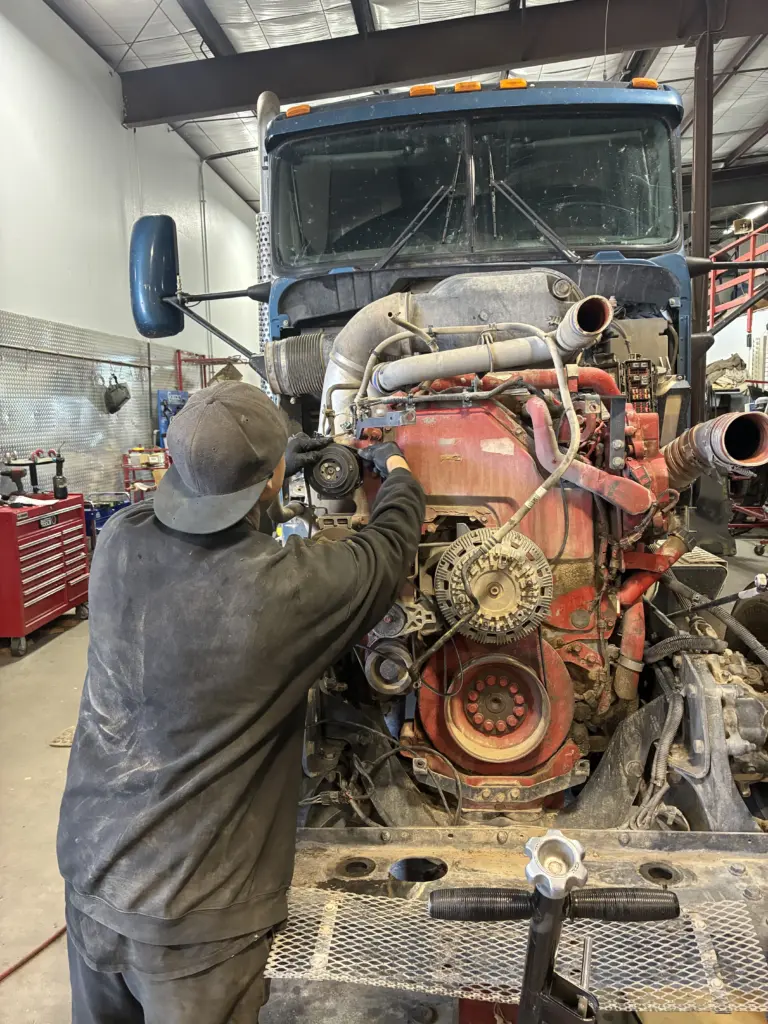
A Body Shop That Also Turns Wrenches
Our collision repair goes beyond repairing body damage. Our technicians can perform a wide array of mechanical repairs caused by an accident. This allows us to manage the repair under one roof, which streamlines the repair process and customer communication.
Repairs are completed in our 12,000 square foot facility with 10 service bays. Whether your truck needs Body Repair along with mechanical work or both at the same time, the goal is to keep the repair process organized instead of splitting it between multiple shops.
The Mechanical Damage a Collision Leaves Behind
A collision can damage much more than doors, hoods, and bumpers.
Common problems include bent brackets and mounts, crushed air lines, wiring looms that have been pulled apart or rubbed through, and parts that have been pushed out of position without breaking.
That last type of damage is easy to do. A truck may leave the scene running fine, then develop problems a couple of weeks later because something shifted during the impact.
Hidden damage is investigated during teardown. It is not guessed at from the outside.
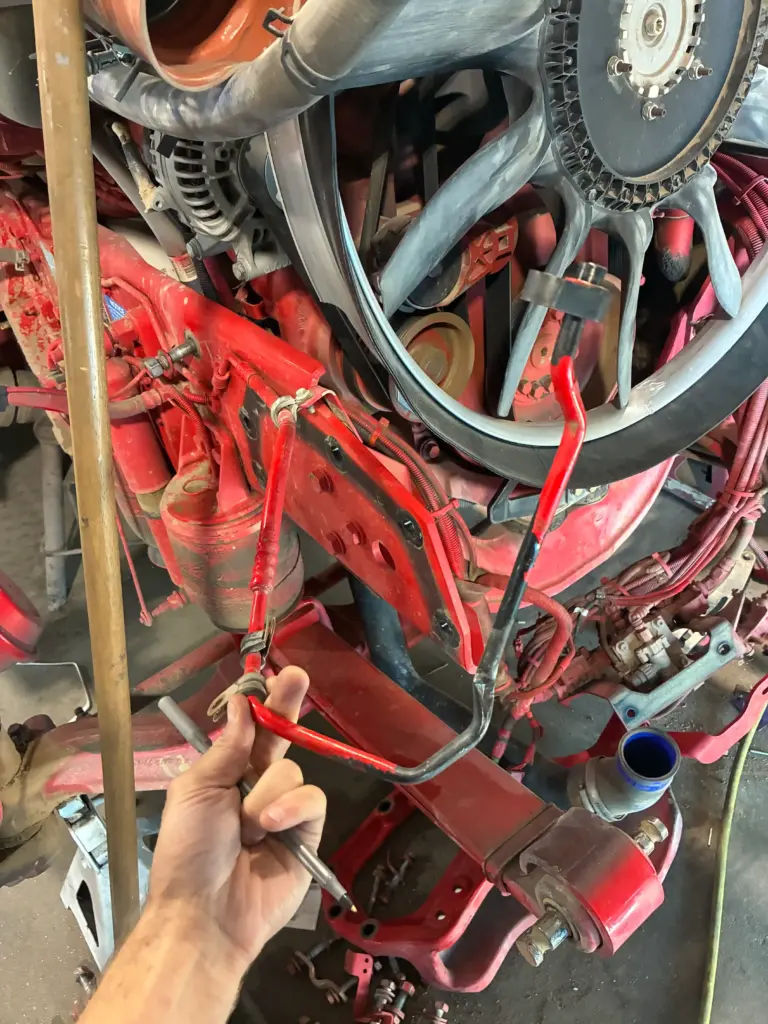
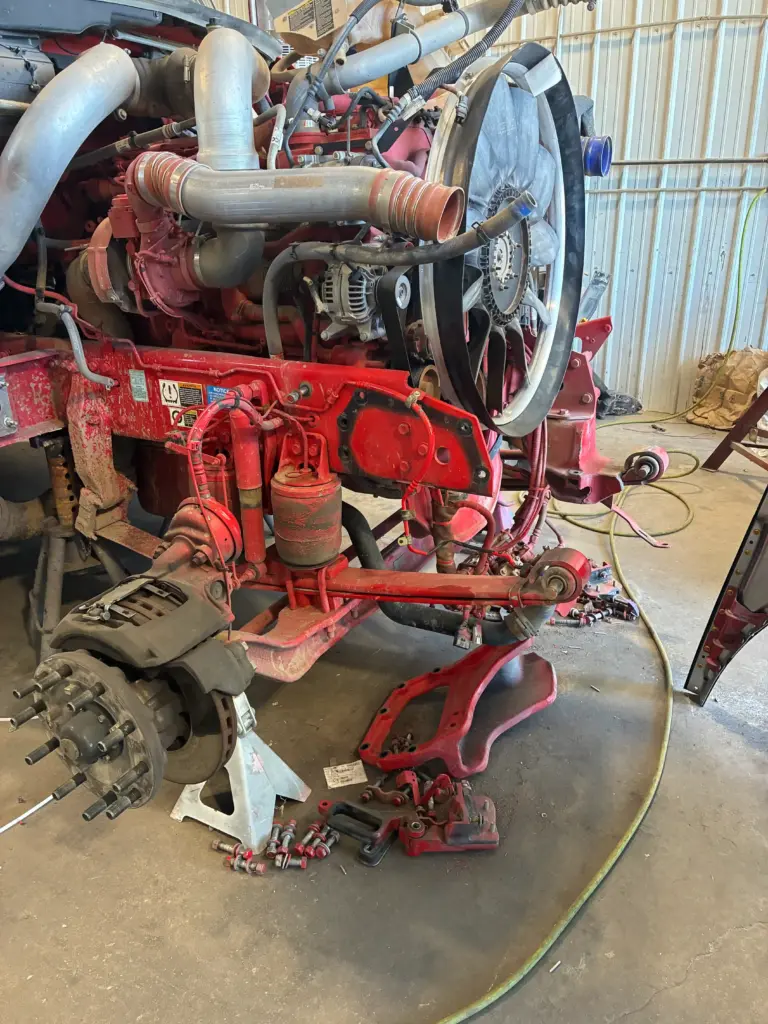
Steering and Suspension After a Wreck
A curb strike or front corner impact can damage steering and suspension parts even when the body damage does not look severe.
That can include the steer axle, tie rods, drag links, steering arms, leaf springs, U bolts, shackles, air ride bags, and suspension hangers.
When those parts move out of position, the truck may pull to one side, wander across the lane, or wear out a steer tire much faster than normal.
Steering and suspension damage often goes hand in hand with frame damage. If the impact reached the structure of the truck, see our Frame Repair page to learn more about that part of the repair.
Damaged Hood? Keep the truck earning
Ask about a loaner hood so your unit can stay in service while we repair or replace yours.
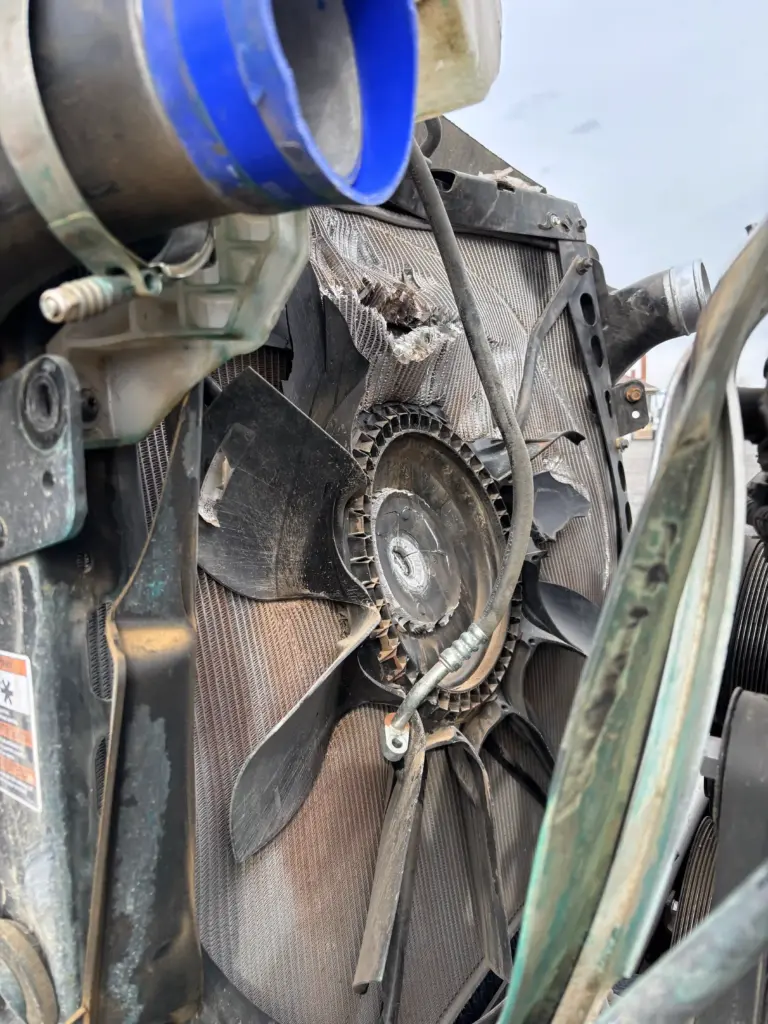
Cooling and Charge Air Damage From a Front End Collision
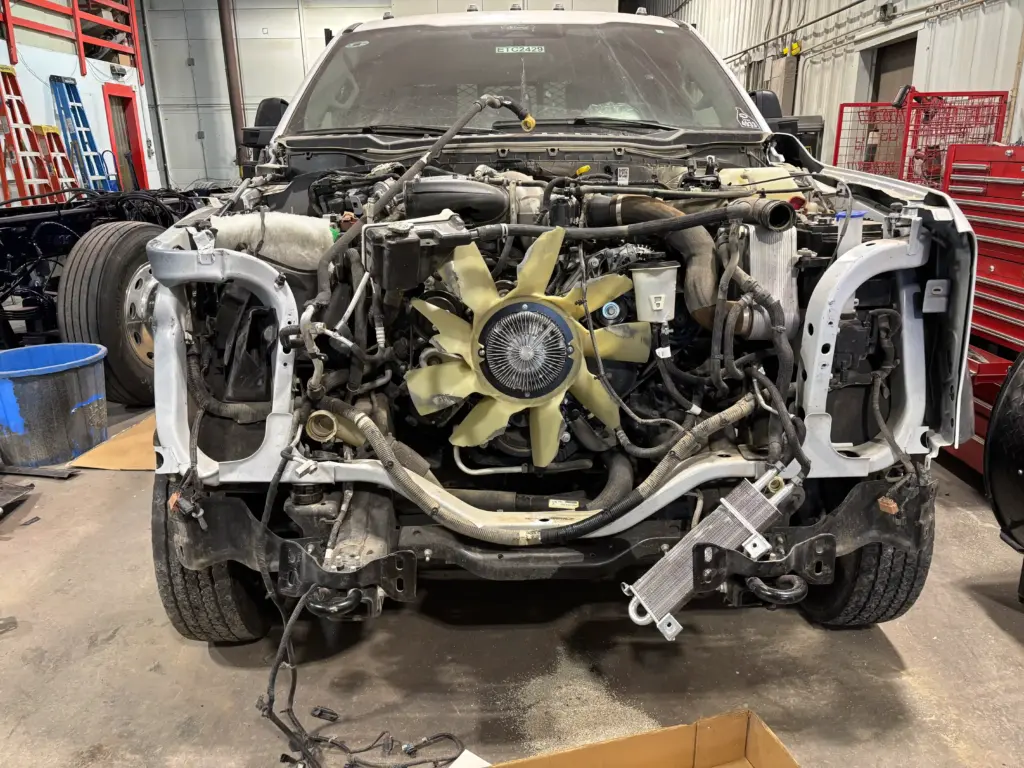
Everything behind the grille sits in the crush zone.
That includes the radiator, charge air cooler, air conditioning condenser, fan, fan shroud, surge tank, hoses, and clamps.
Sometimes a truck can still drive home after a collision. Days later it starts overheating or loses boost pressure because a cracked cooler or rubbed hose develops a slow leak.
These parts are pressure checked and inspected instead of being judged by appearance alone.
Air Systems, Brakes, and DOT Relevant Items
A collision can tear or crush air lines, fittings, glad hands, air tanks, valves, and brake chambers.
Sideswipes can also damage lights, reflectors, mudflaps, and mirrors.
These are some of the first things an officer notices during a roadside stop. They also matter for safe operation. Damage to these components is addressed before the truck goes back to work.
How Deep Our Mechanical Work Goes
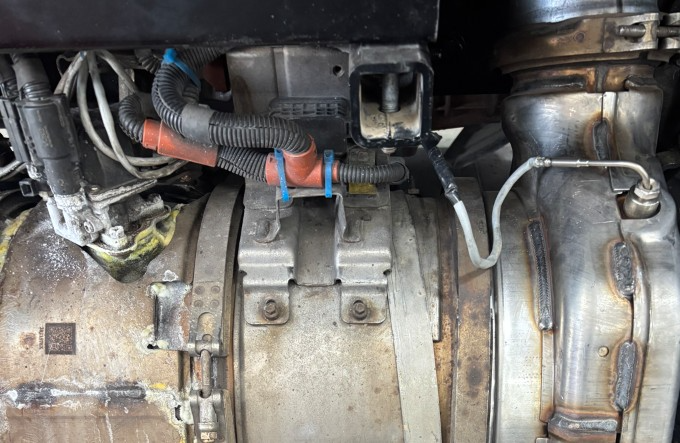
Mechanical repairs are handled alongside collision repairs, but every shop has limits on what it does. We outsource engine, transmission, axle, and complex electrical work to a small group of trusted partners.
Our repair partners typically come to us so vehicles don’t have to be moved during the repair. This allows us to keep the repair moving to get your vehicle back on the road. Some repairs may also involve Fabrication or become part of larger Complete Restorations, depending on the condition of the vehicle.
Testimonial


 Trustindex verifies that the original source of the review is Google.
 Trustindex verifies that the original source of the review is Google.
 Trustindex verifies that the original source of the review is Google.
 Trustindex verifies that the original source of the review is Google.
 Trustindex verifies that the original source of the review is Google.
20+ Client Reviews
Contact Us
Talk to Us About the Mechanical
If your truck was in a collision and you are not sure what mechanical damage it may have, give us a call. We can talk through the repair with you.


Let’s Get In Touch
"*" indicates required fields
Frequently Asked Questions
Do I have to take my truck to a second shop for mechanical work after collision repair?
Not always. Mechanical repair can be handled along with collision repairs, which helps avoid moving the truck to another shop after the body work is finished. That means one intake, one repair file, and one office team keeping you informed throughout the process.
My truck appears misaligned after a front-end hit. Is that mechanical or frame?
It can be either, or both. A collision may bend steering or suspension parts, damage the frame, or affect both at the same time. The cause needs to be identified before repairs begin because similar driving symptoms can come from different types of damage.
Can you replace a radiator or charge air cooler that got smashed in a wreck?
Yes. Front end collisions often damage the radiator, charge air cooler, condenser, hoses, clamps, and other cooling system parts behind the grille. Those components are inspected and pressure checked rather than judged only by how they look from the outside.
Do you do routine mechanical work on a truck that has no body damage?
No. We are a collision repair shop first. While we complete accident-related mechanical repair in-house, we suggest customers bring their truck to a mechanic shop for routine mechanical maintenance.
Will you check air lines and lights before the unit goes back into service?
Air lines, fittings, brake-related air components, lights, reflectors, mudflaps, and mirrors are common collision damage items. These are addressed as part of the repair before the unit goes back to work. This does not mean a separate inspection or certification is performed.