
Spray-On Bedliner and Reflex for Commercial Vehicles
What is a Spray-On Liner?
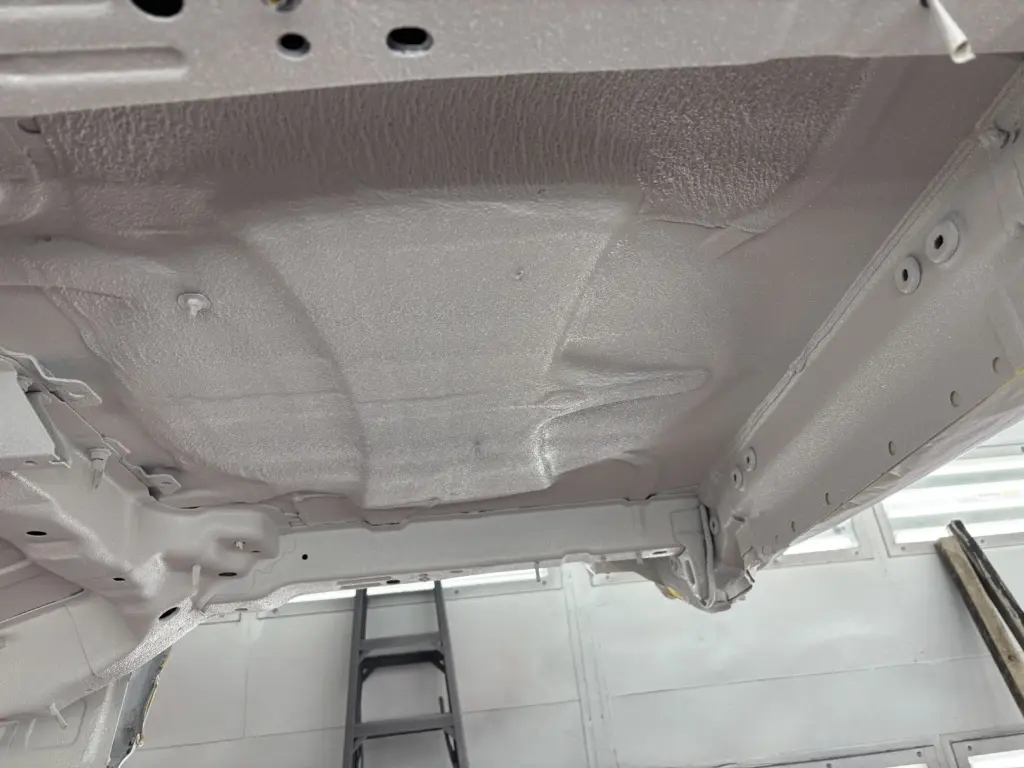
Spray-on protective liners are applied to surfaces that experience significant wear and tear. They are often made of a rubberized or plastic textured material. The material is sprayed onto a surface in a liquid form and hardens to a solid using a chemical reaction.
We utilize two types of spray-on liners. One form is sprayed out of a paint gun and the other is sprayed utilizing a specialized machine (Reflex). Which one we use depends on the application. Reflex is more appropriate for areas that flex and take a significant beating. It is rubberized and can be sprayed on up to a quarter inch thick. Liners sprayed out of a paint gun can be more appropriate for pickup trucks or other applications where appearance is more crucial.

20+ Client Reviews

Let’s Get In Touch
"*" indicates required fields
Home » Spray on Liner
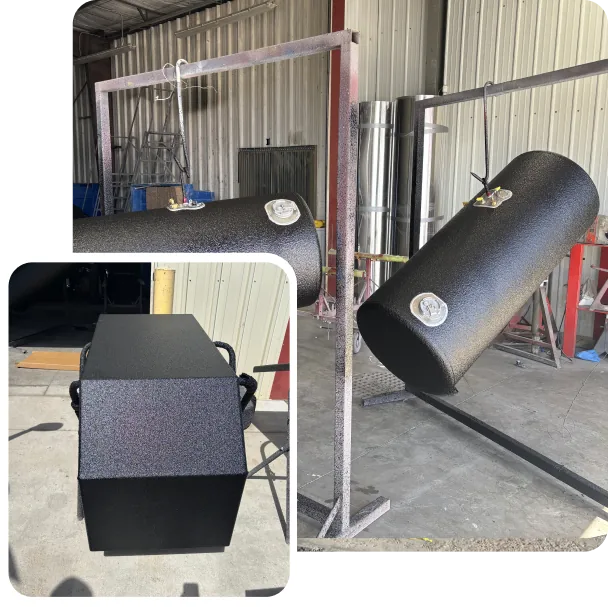
Past the Pickup Bed: Where Reflex Goes on a Work Truck
Pickup beds are a common place for a spray-on liner. They take daily abuse from tools, cargo, and equipment being loaded and unloaded.
Spray-on liners can also be applied in other places on a work truck or tractor. Fiberglass tractor fenders can crack from rock chips. Paint on pickup truck rocker panels and fenders take a beating over time. Fuel tanks are low to the ground and prone to excessive beating. Spray-on liners can be applied just about anywhere on a truck that sees significant wear.
Learn more about our Pickups, Utility Vehicles, Vocational Trucks, and Vans services.
Abrasion, Chemical, and Corrosion Protection
Abrasion
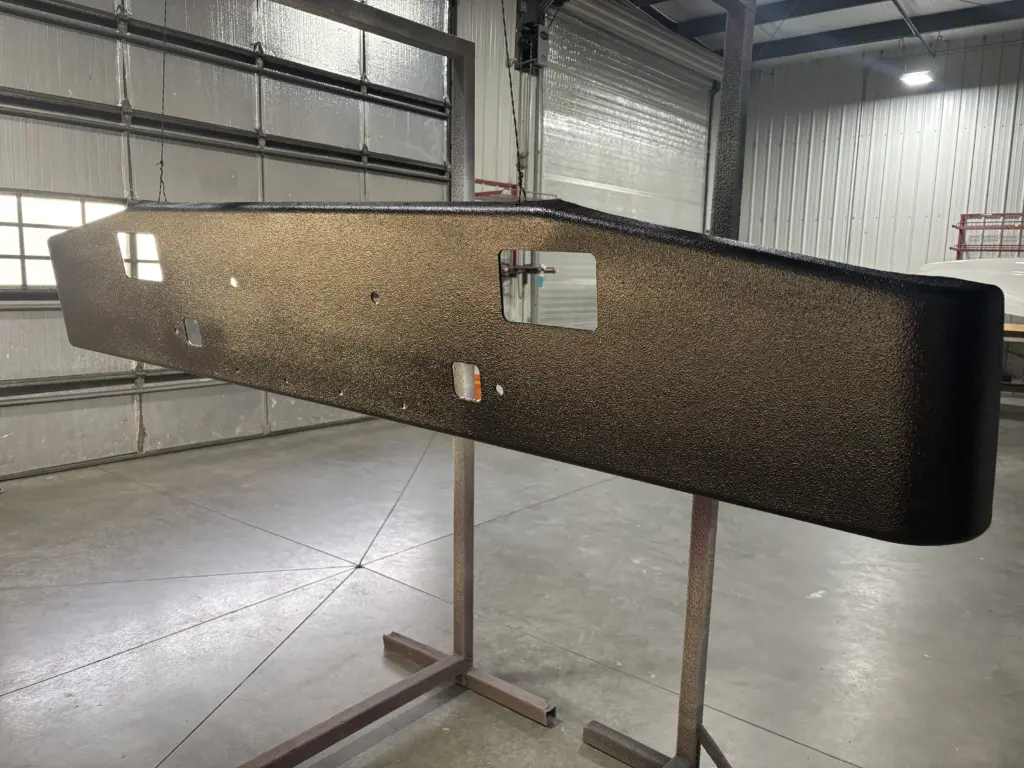
Daily work wears on painted metal. Pallets, toolboxes, pipe, gravel, and hand trucks can scrape across floors and beds every day. A sprayed liner helps keep that wear off the metal underneath.
Chemical
Fuel, oil, solvent, fertilizer, and cleaning product spills can damage painted surfaces. A liner helps keep those materials from reaching the metal.
Corrosion
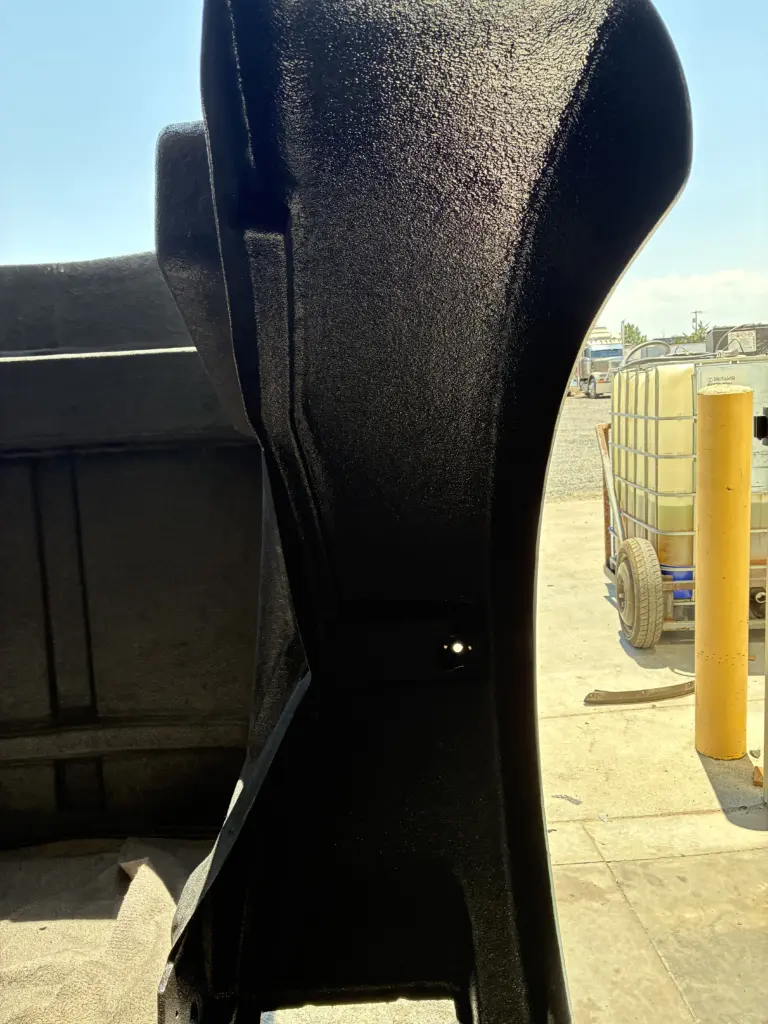
Road salt and de-icer can hold moisture against bare metal in wheel wells and bed seams. A sprayed liner helps keep moisture, salt, and debris off those areas before they reach the metal.
Prep Is Most of the Job
A sprayed liner is only as good as the surface under it.
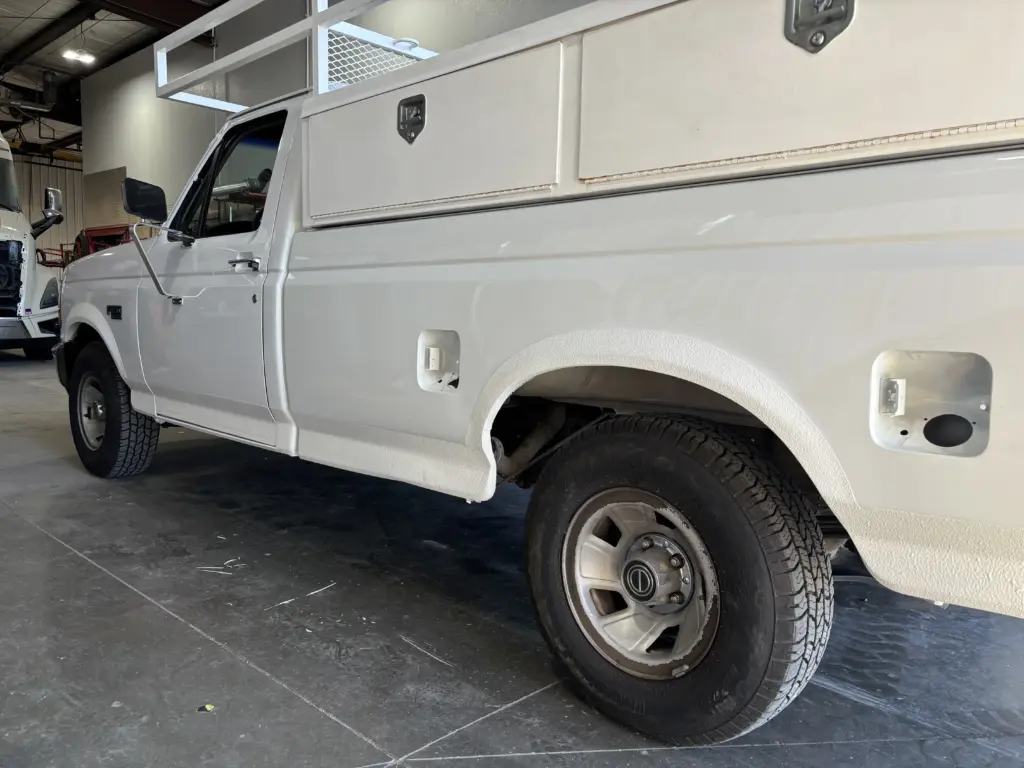
The work starts with cleaning and degreasing. Loose rust and old coating are removed. The surface is scuffed or blasted so the liner has a good surface to bond to. If there is rust-through or damaged metal, those repairs should be made before the liner is applied. Careful masking helps keep the edges clean and straight.
A liner that peels almost always peeled because of prep, not product.
If your truck needs surface preparation or repairs first, see our Sandblasting, Body Repair, and Fabrication services.
Damaged Hood? Keep the truck earning
Ask about a loaner hood so your unit can stay in service while we repair or replace yours.
Color and Texture Options
Most customers ask two questions. Can the liner match the truck? How rough or smooth will it feel underfoot? We can match any color using one of two methods. We can either “tint” the liner to match the color of the truck or we can paint over the liner after it has been sprayed. The first method will mix the color throughout the liner so there will be color under the surface if the material ever chips or scuffs. Spraying the liner on afterwards, however, can lead to a better paint match if the panel is painted at the same time.
The texture of the material can also be controlled. Spray-on liners applied with a paint gun have the most texture control and can even be sprayed completely smooth. Reflex tends to be “rougher” and “bumpier” but is more flexible and may make sense for heavy duty applications.
Repairing Spray-on Liner
A damaged liner can be sanded, repaired and resprayed without needing to strip the liner completely off. The old liner area must be properly prepped before application. The new liner is then carefully blended into the old liner.
Warranty and What Is Covered
Warranties can vary for spray-on liners depending on the manufacturer. We will discuss any warranties up front before completing any work. Fleet Collision will warranty any work from peeling, flaking, or bubbling from surface preparation issues.
Testimonial


 Trustindex verifies that the original source of the review is Google.
 Trustindex verifies that the original source of the review is Google.
 Trustindex verifies that the original source of the review is Google.
 Trustindex verifies that the original source of the review is Google.
 Trustindex verifies that the original source of the review is Google.
20+ Client Reviews
Contact Us
Ask About Reflex for Your Truck or Fleet
Whether you manage a fleet or run one truck, you can ask about a Reflex liner that fits your equipment.

115 E 4th Street Rd Greeley, CO 80631

970-356-2208

Monday – Thursday: 8am to 5pm
Friday: – 7am to 3:30pm
Saturday and Sunday:- Closed
You can also visit our Contact page or learn more about our Refinishing services.
Let’s Get In Touch
"*" indicates required fields
Frequently Asked Questions
What is the difference between a sprayed-on liner and a drop-in plastic bedliner?
A sprayed Reflex liner is applied directly to the surface of the truck. It follows the shape of the bed, including seams and bolt heads. A drop-in plastic liner sits on top of the metal. It can move during use and allow water and grit to collect underneath.
Can a liner be sprayed on floor surfaces that see significant wear and tear?
Yes. Reflex is not limited to pickup beds. It may also be used on service body floors, compartment floors, van cargo floors, wheel wells, trailer decks, and other work surfaces where extra protection is needed.
Will a sprayed liner stop rust that has already started on a bed floor?
A sprayed liner is not a replacement for repairing damaged metal. If rust has already started, the surface should be inspected first. Loose rust, rust-through, or damaged metal should be repaired before the liner is applied so the finished job starts with a solid surface.
Does the surface need to be stripped or blasted before a liner goes on?
Preparation depends on the condition of the surface. The truck may need cleaning, degreasing, removal of loose coating or rust, and scuffing or blasting before the liner is applied. Proper preparation is one of the most important parts of the job because the liner depends on a well-prepared surface.
Can you repair damaged spray on liner?
Typically, yes. A damaged area can be sanded, repaired and resprayed without needing to strip the liner completely off. The old liner area must be properly prepped and the new liner carefully blended in.